Guinea pigs require a diet high in fibre and protein, with some fats, carbohydrates, vitamins and minerals. Fibre is a critical part of a guinea pig’s diet. Diets lacking fibre have been associated with gastrointestinal and dental diseases.
Guinea pigs cannot produce and store Vitamin C (ascorbic acid) in their body; hence Vitamin C is a dietary essential for a guinea pig and must be provided in the daily diet. Deficiencies of vitamin C can lead to a range of serious diseases.
It is important to provide a diet for your pet guinea pig high in protein, fibre and vitamin C. This can be achieved by providing plenty of good quality oaten or timothy hay, a small amount of a quality pellets, as well as daily vegetables and fruits. Too much fruit in the diet can lead to gastrointestinal issues, and we recommend using fruits as treats only.
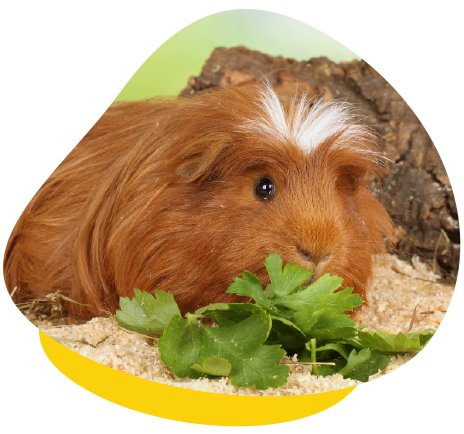
Vegetables that are safe to feed and that contain high levels of Vitamin C include leafy green lettuce (not iceberg), parsley, broccoli (stem and flower), kale, Asian greens, capsicum, spinach and mint.
Guinea pigs love fresh grass, which is great for their digestive and dental health. Providing time on the lawn either in a secure cage or whilst being supervised is a great way to provide grass to your pet.
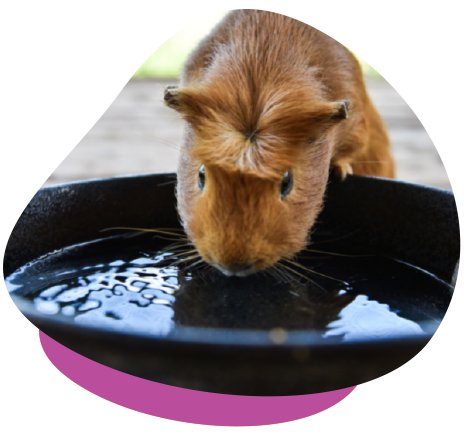
Clean, fresh water should be on offer at all times. This can be provided easily with a drinker bottle attached to the cage; however, many guinea pigs do prefer a bowl.
Iceberg lettuce and potato should be avoided as they may cause diarrhoea in your guinea pig.
 Locations